What was the tomb of Lazarus like? I was surprised...
When preparing to draw the tomb that Lazarus was resurrected from (John 11:38) for the upcoming Gospel of John: Word for Word Bible Comic, I did some research into "what is considered to be the traditional site for this resurrection?"
I turned up the location, in modern Al-Eizariya (ancient Bethany). Here there is a tomb, and when looking deeper into it, it seems the place from which Lazarus was resurrected lies underfoot and in order to get out, he would have emerged from underground out of a horizontal hole in the ground.
Visually, it's really different to the way that it's always been depicted, which would seem to be a misconception.
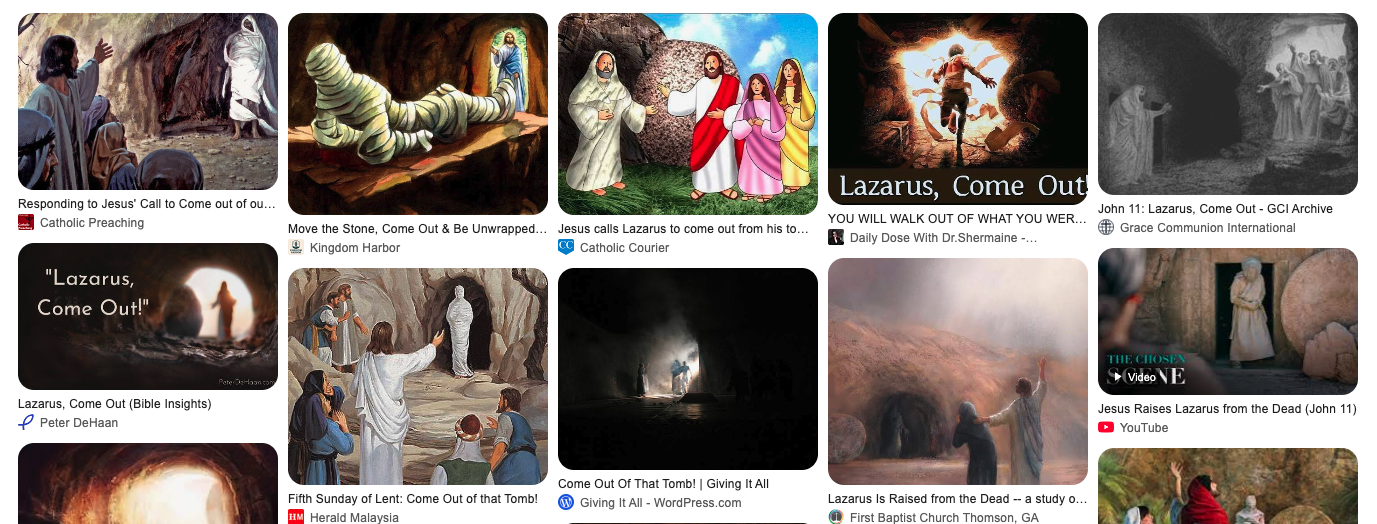
You only have to do a Google Image search to see that normally the door is shown to be upright, with a stone rolled away and Lazarus walking out.
While we never 100% know if it's really the specific tomb, it's been venerated as the site since the fourth century, and there's no reason that people in the local area would have forgotten the location of such a momentous event.
A Confirmation?
As I looked closely at the text from John, to me it seems to confirm the tomb door was horizontal. Unlike Jesus's tomb, where the stone was rolled away, implying the stone was round and upright, in the account of Lazarus, it says this…. (John 11:38 from Bible Hub Interlinear)

Looking at the literal translations, this Koine Greek is rendered: “the tomb, and it was a cave, and a stone was lying upon it,” Here:
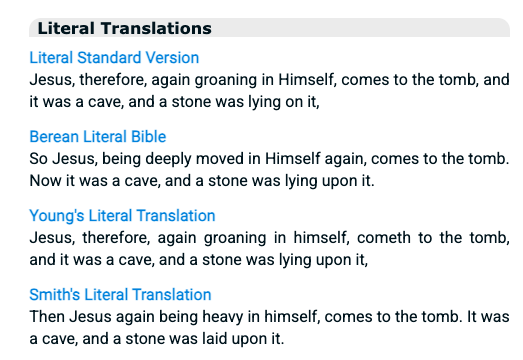
While we might conceive of a cave being upright in a wall, again, that's not always true. Caves are often accessed with a hole in the ground.
We can see the Greek translation more literally says that the stone was “lying upon” the cave entrance. To me, this confirms that it was horizontal, but that is a big surprise because it is not the way we normally conceive of it!
What was the Lazerusus Tomb like?
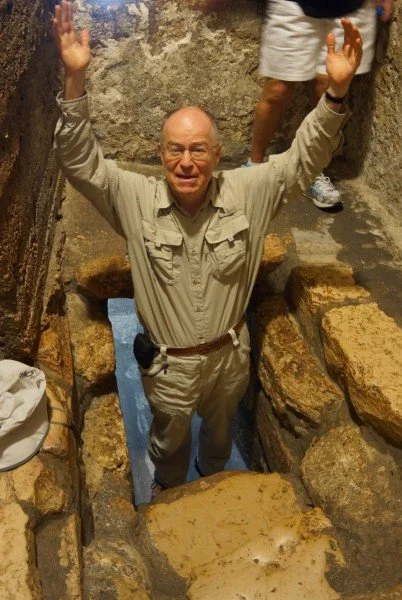
It seems Lazarus’s resurrection would be more like this image, re-enacted in the real tomb at Al-Eizariya by Mike Mason, coming up out of the ground! Here is a picture from his blog.
Below, the first illustration (Fig 3) is what the outside of the location of Lazarus's tomb looked like in 1824, at street level. The next two diagrams (Fig. 2) are a plan looking down and then a cross-section of the same tomb. The room in the underground structure marked “2” is Lazarus's tomb. The room above, marked “3”, is a Crusader-period chapel dedicated to Lazarus, and “1” is the stairs up to the modern-day exit, as the whole place is buried under centuries of earth.
Looking at the cross-section, it seems the tomb itself was higher up than the entrance, so the entrance must have been in front of a hill. As the whole thing is now buried, it is hard to know, but that is how I plan to depict it.
In this reel on Instagram, the creator goes through the door on the street, down the steps, into the Crusader temple, and shows the room of Lazarus's tomb. Who knew that Lazarus had such lovely wood and glass floors?
Bonus Images
Here's a bonus inaccurate Roman depiction of the event from the 3rd century, with Jesus resurrecting Lazarus with his magic wand! :D
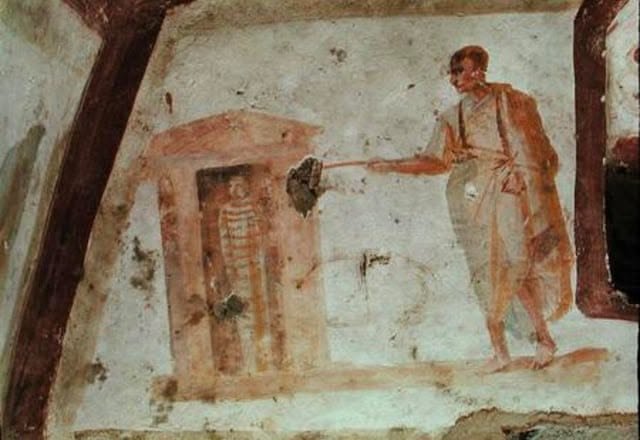
3rd Century, Callistus Catacombs, Rome
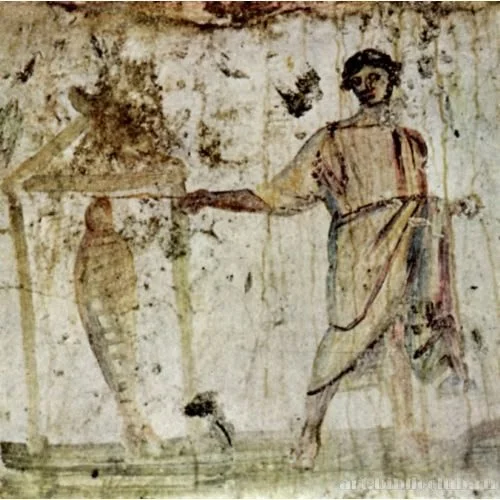
Late 3rd Century, Catacombs of Saints Peter and Marcelin, Rome
Get ready to back the Gospel of John Kickstarter
We'll be launching the Kickstarter for The Gospel of John on the 9th September. To see some preview pages and to get notified, go to the pre-launch page and hit the Notify Me button.